











A well-maintained septic tank is crucial when it comes to waste management; it’ll also prevent costly repairs in the future.
 More than 20 percent of U.S. households rely on these systems as an alternative to municipal wastewater systems.
Despite that, many people remain unaware or indifferent about the importance of proper maintenance.
For example, clogs and leaks can occur if your septic tank isn’t maintained properly. Not only would that lead to costly repairs but it could also lead to a complete replacement, which is very expensive process.
A poorly-maintained system won’t just cause functional problems; it can have environmental implications too.
For example, untreated sewage—which is filled with harmful pathogens—can leak back into the environment, harming both humans and animals.
Not only that but it can also cause strong sewage smells to develop.
If you notice an unpleasant odor emanating from your property, chances are, there are underlying issues with your home’s wastewater drainage line.
A septic system primarily consists of two integral parts: the septic tank and leach field. The journey begins with wastewater flowing from your household drainage line into the septic tank, which acts as a holding area for waste material.
Inside the tank, solids settle at the bottom while lighter substances float on top.
In between these layers lies mostly water along with dissolved particles that neither sink nor float. This liquid waste eventually gets released into your leach field dispersal system.
The efficacy of a septic system relies heavily on certain types of natural bacteria present within the tank itself.
These microscopic organisms play a crucial role in the anaerobic digestion process, aka the breaking down of solid wastes.
Potent cleaning solutions like bleach or harsh drain cleaners pose a threat to these beneficial bacteria by killing them off when they enter through drains or toilets; this would lead to inefficient breakdowns and potential blockages inside the pipes.
In some cases, it can even lead to perforated pipes, which are costly to fix.
That’s why it’s so important to use ‘septic-safe’ labeled cleaning products – they are specifically formulated not to harm bacterial populations.
Regular maintenance is key to keeping your septic system functioning properly.
Household waste, including toilet paper, if left unchecked, can cause clogs, which can damage your septic system over time.
To prevent that, you want to pump your septic tanks regularly, ideally once every three to five years, depending on usage and size.
Depending on your location, it can cost anywhere from $200 to $600.
 The leach field is responsible for gradually releasing organic waste into the surrounding soil; this allows natural filtration to occur.
This area requires careful attention. For example, driving or parking vehicles over the leach field could potentially lead to serious harm, including compacted soil, which can impede normal operations.
Choosing the right household cleaning products is key when it comes to preserving your septic system.
More specifically, you want to choose products that are labeled as ‘septic-safe’ or ‘biodegradable’ as they don’t contain harmful ingredients that could disrupt bacterial balance within tanks.
You also want to consider the amount of product that you’re using.
Remember, even if they’re marked as ‘septic-safe’, excess amounts can still affect the balance of bacteria.
This is especially true for laundry detergents as large amounts are released after each wash cycle; this can cause potential harm through chemical buildup inside the septic tanks.
Septic tank treatments are essential when it comes to maintaining the health of your system.
Essentially, these septic treatments are biological additives that are designed to replenish the levels of beneficial bacteria – the ones that are respnsible for breaking down human waste in the tank.
Some also contain organic solvents that are used to break down fat and grease.
Our septic treatment additive is specially formulated with dormant bacteria that will supplement the bacterial populations within your tank.
Using the product regularly will not only help with the breakdown of waste but it’ll also mitigate odors that are often associated with poorly maintained systems.
It’s easy to use too – simply flush one pod down the toilet once every month. The back of the package even comes with a calendar that you can use to keep track of your cleaning schedule.
Maintain your septic system by conducting regular inspections, scheduling pump-outs once every 3-5 years, and using septic-safe cleaning products.
It’s also recommended that you treat your septic tank with ACTIVE once a month.
Ideally, you want to check for leaks or clogs, schedule pump-outs based on usage and size, and manage the leach fields to prevent damage.
If you notice slow drains, sewage odors around your property, or lush green grass over the drain field area, your tank may be full.
To avoid overloading your leach field dispersal system, it is recommended to limit yourself to one load of laundry per day if possible. For larger amounts, it is best to spread them out throughout the week.
With the Septic Treatment by ACTIVE, you’ll easily be able to maintain the balance of healthy bacteria in your septic system – and all you need is one pod every month.
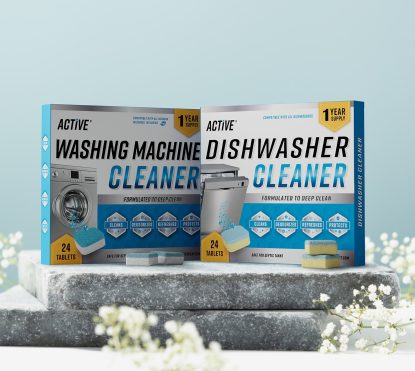
We also offer a range of quality cleaning products and treatments for appliances and more, most of which are safe to use in homes with septic systems.
So what are you waiting for? Let us help take the hassle and guesswork out of your cleaning routine!
Lori Swift –
I have a basement upflush toilet and was worried about the pod casing getting stuck in the blades. It dissolves instantly. No issues at all
Upvote if this was helpful (0) Downvote if this was not helpful (0) Watch Unwatch Flag for removal
clara g –
Whenever the washing machine would drain, the shower would start making these weird glugging noises. It was like the plumbing was gasping for air. Three days after flushing the first pod, the noise completely vanished. The enzymes definitely ate through whatver was restricting the flow.
Upvote if this was helpful (0) Downvote if this was not helpful (0) Watch Unwatch Flag for removal
Paul donovan –
Our house has the original 1950s pipes. No issues with corrosion or damage.
Upvote if this was helpful (0) Downvote if this was not helpful (0) Watch Unwatch Flag for removal
KEVIN RICK –
I was worried the pod casing wouldnt melt in cold water, but it vanishes in seconds. No risk of the plastic clogging the pipes.
Upvote if this was helpful (0) Downvote if this was not helpful (0) Watch Unwatch Flag for removal
SCOTT –
If you live on a septic, stop overthinking it and just buy these.
Upvote if this was helpful (0) Downvote if this was not helpful (0) Watch Unwatch Flag for removal
shane d –
With kids in the house, we go through a lot of toilet paper. These pods dissolve the paper fibers so they don’t form a mat at the top of the tank.
Upvote if this was helpful (0) Downvote if this was not helpful (0) Watch Unwatch Flag for removal
Megan –
Most additives just help with the liquids, but these pods contain bacteria strains specifically designed to break down solids and paper. I did a check of my tank’s first chamber after three months of using these and the mat on top was significantly thinner. It’s actual biological science, not just a grocery store hack.
Upvote if this was helpful (0) Downvote if this was not helpful (0) Watch Unwatch Flag for removal
Stacy –
Just moved from the city to a house with a septic and I was terrified of breaking it. This makes maintenance idiot proof.
Upvote if this was helpful (0) Downvote if this was not helpful (0) Watch Unwatch Flag for removal
Noura –
We have a lift pump in the basement that used to struggle with thick sludge, making a loud grinding noise. Since flushing these monthly, the waste is much more liquefied and the pump runs quiet and fast. It clearly breaks down the heavy solids that shouldn’t be there.
Upvote if this was helpful (0) Downvote if this was not helpful (0) Watch Unwatch Flag for removal
Omar –
We had a massive plumbing issue that required a lot of heavy chemicals to clear. I knew I’d killed off the natural bacteria in the tank. I used two of these pods over two weeks to re seed the system. The stale smell coming from the vent pipes vanished almost instantly. It’s the most efficient way to balance a tank I’ve found.
Upvote if this was helpful (0) Downvote if this was not helpful (0) Watch Unwatch Flag for removal